👉 Oxygen: The Missing “Nutrient” Most People Overlook
Apr 11, 2026Why Oxygen Matters for Energy, Brain Function, and Healing
If you’ve ever stepped outside and taken a deep breath of cool morning air…
Or gone for a walk and suddenly felt more clear and energized…
You’ve experienced something powerful:
👉 Your body responding to oxygen.
Why Oxygen Is So Essential
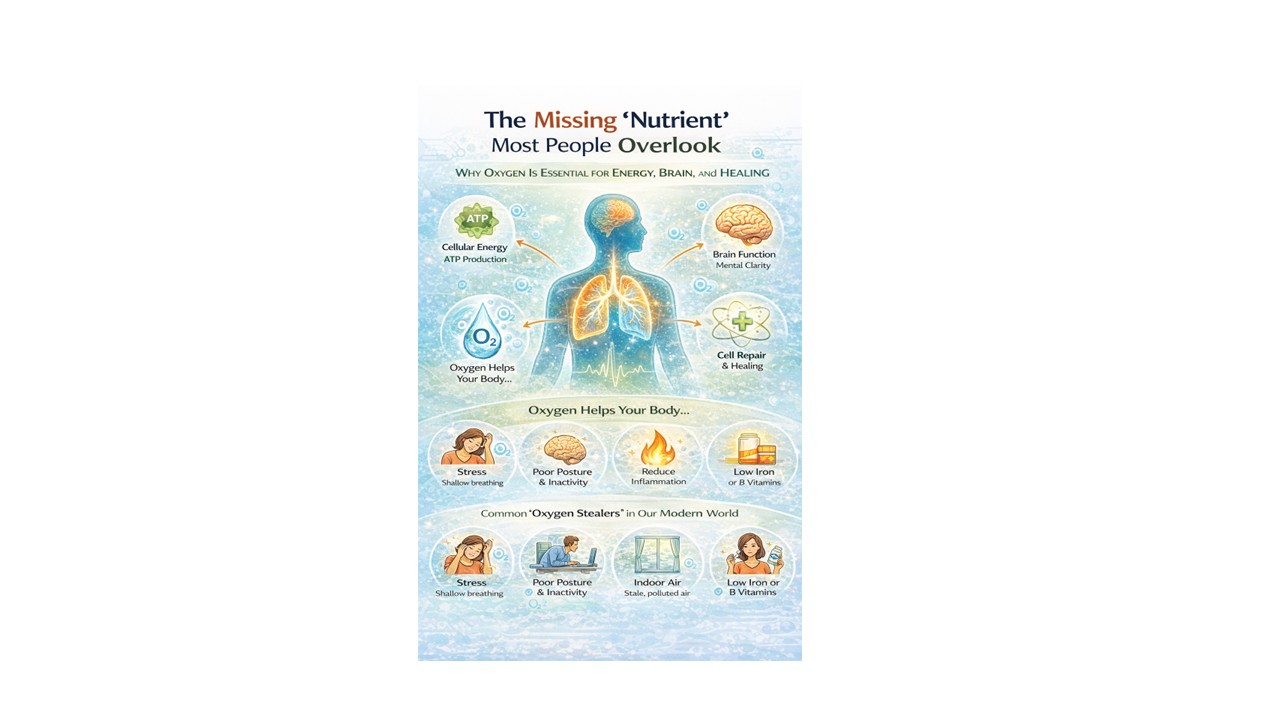
Oxygen isn’t just something we breathe—it’s a critical driver of cellular energy.
Inside your cells, oxygen acts as the spark that allows your mitochondria to produce:
👉 ATP (adenosine triphosphate)
This is the fuel your body uses for:
- Brain function
- Hormone regulation
- Tissue repair
- Inflammation control
- Energy production
Without adequate oxygen, these systems simply don’t function optimally.
Your Brain Depends on It
Your brain is one of the most oxygen-demanding organs in your body.
👉 It uses about 20% of your total oxygen supply
Even small drops in oxygen can lead to:
- Brain fog
- Fatigue
- Headaches
- Poor concentration
And more severe deprivation—even for a few minutes—can result in neurological damage.
If you’ve ever been at high altitude and felt dizzy or foggy…
That was your body signaling:
👉 “Low oxygen.”
Is Oxygen a Nutrient?
Some researchers suggest we should think of oxygen as a nutrient.
Just like:
- Iron
- Vitamin D
- B vitamins
…it must be available in the right amounts for your body to function properly.
While healthy individuals regulate oxygen well, many conditions can interfere with this balance, including:
- Anemia
- Asthma
- Sleep apnea
- Cardiovascular dysfunction
- Mitochondrial dysfunction
The Hidden Problem: “Oxygen Stealers”
Even without a formal diagnosis, modern life introduces factors that reduce oxygen availability at the cellular level.
I call these:
👉 “Oxygen stealers.”
Common Oxygen Stealers
- Stress
Shallow breathing limits oxygen intake - Poor posture & inactivity
Restricts lung expansion and circulation - Indoor environments
Lower oxygen levels and increased pollutants - Low iron or B vitamins
Impairs oxygen transport in the blood
Simple Ways to Improve Oxygen & Energy
The good news is—supporting oxygen delivery doesn’t have to be complicated.
✔ Practice Deep Breathing
A few minutes of diaphragmatic (belly) breathing:
- Improves oxygen delivery
- Calms the nervous system
✔ Move Your Body Daily
Even gentle movement:
- Improves circulation
- Helps oxygen reach your brain and tissues
✔ Check Key Nutrients
Iron and B12 are essential for:
- Red blood cell production
- Oxygen transport
✔ Improve Your Air Quality
- Open windows when possible
- Spend time outdoors
- Reduce indoor pollutants
✔ Support Sinus Health
Keeping nasal passages clear can improve airflow and oxygen intake.
✔ Advanced Support (When Appropriate)
For those dealing with chronic inflammation—particularly post-viral conditions—targeted approaches to support oxygenation may be helpful when guided appropriately.
A Missing Link in Chronic Fatigue and Brain Fog
If you’re struggling with:
- Low energy
- Brain fog
- Slow recovery
Oxygen may be an overlooked piece of the puzzle.
Especially if you’re already working on:
- Hormone balance
- Detoxification
- Mitochondrial support
👉 Don’t forget to ask:
“Am I getting enough oxygen at the cellular level?”
A Final Thought
Sometimes the most powerful interventions are also the most foundational.
Oxygen is not a trend.
It’s a necessity.
And optimizing it can create ripple effects throughout your entire body.
Always have hope for your health and healing
Want to understand what’s really driving your symptoms?
Many of the issues we’ve discussed—whether it’s hormone imbalance, inflammation, chronic pain, or toxin exposure—share a deeper connection with metabolic signaling and appetite regulation.
One of the most important pathways involved is GLP-1, a hormone that influences:
- blood sugar balance
- inflammation
- satiety and cravings
- energy metabolism
When GLP-1 signaling is disrupted, it can make symptoms worse—and healing much harder.
That’s why we created a free 95-page guide to help you understand how to naturally support these pathways and start addressing root causes.