
The Functional Medicine Matrix: Understanding the Root Causes of Chronic Illness
Oct 23, 2026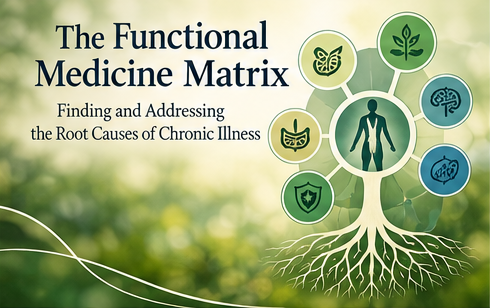
Why nutrition, movement, sleep, stress, relationships, and your personal health story all matter
By Dr. Margaret Christensen, MD
Why Treating Symptoms Is Sometimes Only the Beginning
Have you ever wondered why you can receive treatment for one health problem, only to develop another?
Perhaps you've struggled with fatigue, digestive problems, poor sleep, hormonal changes, or recurring pain. You may have seen several specialists, taken medications, and made lifestyle changes, yet still feel that something important is being overlooked.
Each treatment may address one piece of the puzzle. But what if those pieces are connected?
This is one of the central questions behind functional medicine.
During my years practicing obstetrics, gynecology, and functional medicine, I came to appreciate that a person's health cannot always be understood by looking at one organ or one diagnosis at a time.
Our physical health is influenced by nutrition, sleep, movement, environmental conditions, relationships, stress, emotional experiences, and many other factors.
These influences interact.
Functional medicine offers a framework for exploring those connections, identifying modifiable contributors to illness, and developing a personalized plan that considers the whole person.
One particularly useful tool is the Functional Medicine Matrix, developed by the Institute for Functional Medicine (IFM).
Let's explore how it works—and how you can apply its principles to your own health.
1. What Is Functional Medicine?
Functional medicine is a systems-oriented approach to healthcare that considers how different physiological processes and lifestyle factors influence one another.
Instead of viewing every symptom as an isolated event, practitioners examine patterns and possible contributors across multiple systems.
For example, someone experiencing fatigue might also have sleep difficulties, inadequate nutrient intake, medication effects, hormonal changes, emotional stress, or an underlying medical condition.
These factors may influence one another.
The goal is to identify which issues are relevant to that particular person and determine what can reasonably be improved.
Functional Medicine and Conventional Medicine Can Work Together
Conventional medicine provides essential tools for diagnosing and treating disease, managing emergencies, preventing complications, and providing life-saving interventions.
Functional medicine can complement that care by placing additional emphasis on detailed histories, lifestyle factors, and relationships among biological systems.
Medications, procedures, and appropriate diagnostic testing remain valuable parts of healthcare.
The important distinction is not that one approach treats symptoms while the other treats causes.
Rather, functional medicine encourages clinicians to ask additional questions about contributing factors that may not be obvious when symptoms are examined individually.
The Patient Becomes an Active Partner
One of the principles I value most is the therapeutic partnership.
Patients bring information that no laboratory test can capture completely: their experiences, circumstances, priorities, and knowledge of how their bodies respond.
When clinicians and patients work together, they can identify patterns, evaluate realistic options, and develop plans that fit the individual's life.
This collaborative approach is especially meaningful for people who have struggled with complex or persistent health concerns.
2. The Functional Medicine Matrix: Think of Your Health as a Tree
Imagine a large tree growing in your backyard.
Its leaves and branches are what you notice first.
But the health of the tree also depends on its trunk, root system, soil, water, sunlight, and surrounding environment.
Your health works in a similarly interconnected way.
The IFM framework uses a tree analogy to help explain these relationships.
The Leaves and Branches: Symptoms and Diagnoses
The visible parts of the tree represent the symptoms and health conditions we recognize.
Examples might include:
- Persistent fatigue
- Digestive problems
- Headaches
- Hormonal symptoms
- Anxiety or poor sleep
- Joint and muscle discomfort
- Metabolic conditions
These symptoms deserve appropriate medical attention.
But they may also prompt questions about the underlying physiological processes and daily circumstances contributing to them.
The Trunk: Your Body's Interconnected Systems
The trunk represents the body's major physiological functions.
The IFM Matrix organizes these into interconnected categories, including:
- Assimilation, digestion, and absorption
- Defense and repair
- Energy production
- Biotransformation and elimination
- Communication between cells and organs
- Transport of nutrients, blood, and other substances
- Structural integrity
A disturbance in one system may affect several others.
For example, inadequate sleep can influence metabolic regulation, mood, attention, and pain perception.
Nutritional deficiencies can affect multiple biochemical pathways.
Chronic stress may change sleep habits, digestive symptoms, and cardiovascular responses.
The Matrix helps clinicians consider these relationships systematically.
The Roots: The Foundations of Daily Health
Beneath the visible tree are the roots.
These represent foundational influences that support—or challenge—health.
Five important modifiable lifestyle areas are:
- Nutrition
- Exercise and movement
- Sleep and restoration
- Stress and resilience
- Relationships, beliefs, and social connection
These factors cannot explain every illness, and modifying them does not guarantee recovery.
However, they often provide practical opportunities to improve health, functioning, and quality of life.
The tree analogy reminds us that caring for the roots is an important part of caring for the entire organism.
3. Root One: Nutrition — Giving Your Body the Materials It Needs
Every cell depends on nutrients to perform its work.
Proteins provide amino acids for tissue maintenance and numerous physiological functions.
Vitamins and minerals participate in enzyme reactions.
Fats contribute to cell membranes, signaling molecules, and energy storage.
Carbohydrates provide energy, while dietary fiber contributes to gastrointestinal health.
Water supports circulation, temperature regulation, and many metabolic functions.
Functional nutrition considers both what a person eats and whether their nutritional needs are being met.
Nutrition Is More Than a Diet Label
A nutritional plan should consider the individual's medical history, preferences, food access, digestive function, medications, and overall nutritional status.
A person recovering from surgery may have different needs from someone managing diabetes or preparing for pregnancy.
Likewise, someone with a medically necessary restricted diet may require additional attention to nutrient adequacy.
Rather than following an identical plan for everyone, the objective is to identify sustainable eating patterns that meet the individual's needs.
Start With Practical Questions
Are meals providing adequate protein and essential nutrients?
Are long workdays or family responsibilities making it difficult to eat regularly?
Do digestive symptoms interfere with food intake?
Are dietary restrictions creating nutritional gaps?
These questions can reveal meaningful opportunities for improvement without assuming that every symptom originates in the diet.
4. Root Two: Movement — Supporting Health Through Activity
Our bodies are designed to move.
Physical activity supports cardiovascular health, muscle strength, balance, bone health, and metabolic function.
It can also contribute to emotional well-being.
But movement should be appropriate for the individual.
Exercise Does Not Have to Mean an Intense Workout
Walking, gardening, household activities, stretching, resistance exercises, and other forms of movement can contribute to daily activity.
For some people, formal exercise is enjoyable and accessible.
For others, especially those living with pain, disability, or substantial fatigue, movement may need to begin with very small, carefully selected activities.
The aim is not to impose unrealistic expectations.
It is to identify what is safe and feasible.
Meeting Patients Where They Are
One of the themes in my functional medicine teaching is recognizing a person's current capacity.
Someone who has been inactive for years may benefit from gradual progression.
A person with post-exertional malaise, significant cardiovascular symptoms, or another condition in which exertion can worsen illness requires a different approach, including appropriate assessment and activity pacing.
Movement should support health, not become another source of shame or physical deterioration.
5. Root Three: Sleep and Restoration — Why Recovery Requires Rest
Sleep affects almost every major physiological system.
During sleep, the body carries out processes involving memory, metabolic regulation, immune function, and tissue maintenance.
Insufficient or disrupted sleep can contribute to fatigue, impaired concentration, mood symptoms, and altered metabolic health.
Look Beyond the Number of Hours
Sleep quality matters alongside sleep duration.
A person may spend eight hours in bed but experience frequent awakenings, breathing disturbances, or other problems that interfere with restorative sleep.
Possible contributors include medications, pain, environmental conditions, irregular schedules, sleep apnea, and psychological stress.
Supporting Healthier Sleep
Simple strategies may include maintaining a consistent sleep schedule, obtaining appropriate daytime light exposure, limiting disruptive evening light, and developing a calming bedtime routine.
Persistent insomnia or suspected sleep apnea deserves appropriate medical evaluation.
The goal is not to assume that every health problem can be fixed by sleeping more.
It is to recognize sleep as an important foundation that should not be overlooked.
6. Root Four: Stress and Resilience — Understanding the Mind-Body Connection
Stress is a normal biological response.
When we perceive a challenge or threat, the nervous system and hormonal pathways help prepare the body to respond.
These responses can be useful in the short term.
But prolonged stress may affect sleep, mood, digestion, cardiovascular function, pain perception, and health-related behaviors.
Why Emotional Experiences Matter
Throughout my clinical career, I have emphasized that physical experiences often have emotional, psychological, and social dimensions.
In my work with women during pregnancy and childbirth, I observed how fear, uncertainty, relationships, and the surrounding environment could influence patients' experiences.
These observations helped shape my broader whole-person approach to healthcare.
The message is not that physical illness is imaginary or that patients cause their illnesses through negative thoughts.
It is that emotional experiences and physiological processes interact.
The Importance of Trauma-Informed Care
Adverse Childhood Experiences, commonly called ACEs, have been associated with elevated risks for a range of later health problems at the population level.
Researchers continue to investigate pathways involving stress biology, behavior, social conditions, and other influences.
An ACE history does not determine a person's future, and having a chronic illness does not mean that unresolved trauma must be its cause.
Nevertheless, a sensitive understanding of someone's experiences can be relevant to their care.
Trauma-informed approaches emphasize safety, collaboration, respect, and avoiding unnecessary retraumatization.
Building Resilience
People develop resilience through different approaches.
These may include mindfulness practices, breathing exercises, supportive relationships, psychotherapy when appropriate, enjoyable activities, spiritual practices, or changes to stressful circumstances.
No single technique works for everyone.
The goal is to expand the person's ability to respond to challenges while recognizing that some stressors require practical changes and additional support.
7. Root Five: Relationships, Beliefs, and Community
Human beings are social.
Our relationships can influence mental health, daily habits, access to support, and our ability to cope with difficult circumstances.
Supportive relationships may provide practical help and emotional encouragement during illness.
Social isolation, on the other hand, can make difficult experiences feel even more overwhelming.
Why Being Heard Matters
One of the distinctive themes in my teaching is the healing value of a patient's story.
A complete history involves far more than reviewing symptoms on a checklist.
It includes learning about life events, beliefs, relationships, previous experiences with healthcare, and the circumstances surrounding symptom onset.
Listening carefully may reveal information that would otherwise be missed.
Just as importantly, it helps create a therapeutic relationship built on trust and understanding.
Spirituality and Personal Meaning
For some people, faith and spirituality provide comfort, motivation, and connection.
For others, a sense of purpose comes through family, community, creativity, nature, or service.
The role of beliefs should be explored respectfully and according to the individual's preferences.
Meaning and connection are not substitutes for medical treatment, but they can be valuable parts of a person's broader support system.
8. Why Your Personal Health Story Matters
The Functional Medicine Matrix becomes especially useful when combined with a detailed personal history.
Consider two people who both report fatigue.
One developed symptoms after a significant illness and experiences worsening after physical exertion.
Another has been sleeping poorly for months while caring for a family member and has recently developed iron deficiency.
Both describe fatigue.
But the factors contributing to their symptoms—and the appropriate evaluations—may be very different.
Looking for Patterns Over Time
A health timeline can help organize important information.
It may include the onset of symptoms, major diagnoses, medications, surgeries, infections, life changes, environmental concerns, dietary changes, and other relevant events.
This does not mean that every event on the timeline caused a medical condition.
Instead, the timeline helps patients and clinicians ask better questions.
The GOTOIT Framework
The Institute for Functional Medicine describes a structured clinical process commonly called GOTOIT:
Gather: Collect the patient's history and relevant information.
Organize: Arrange findings into meaningful patterns using clinical tools such as the Matrix and timeline.
Tell: Develop and communicate the patient's health story.
Order: Prioritize concerns and possible contributors.
Initiate: Begin an appropriate, individualized care plan.
Track: Follow progress and adjust the plan when necessary.
This process illustrates how a complex history can be organized into manageable decisions.
9. Why Community Can Make Health Changes More Sustainable
One of the important subjects I discuss in my functional medicine chapter is collaborative care.
Changing habits and navigating chronic health problems can be difficult when someone feels isolated.
Group programs and shared learning opportunities may provide education, practical encouragement, and a sense of connection.
What Are Shared Medical Appointments?
Shared medical appointments are healthcare visits in which a clinician sees multiple patients in a structured group setting while addressing appropriate clinical and educational needs.
These models differ from general health education groups or coaching communities.
Research suggests some group-care approaches can improve selected outcomes and patient experiences, although results depend on the program and population.
Educational Mentorship and Community
Another approach is structured health education and mentorship.
Participants learn about relevant biological processes, reflect on their experiences, discuss questions, and build health literacy.
The objective is not to diagnose or treat participants collectively.
It is to help them become better informed and more confident when navigating their health decisions.
This philosophy is part of the foundation of Mentored Healing, the educational group mentorship program I developed with Dr. Gail Clayton, DCN, CNS, MS, RPh, LDN.
10. Turning Knowledge Into Lasting Change
Understanding the five foundational lifestyle factors is helpful, but making changes can feel overwhelming.
Where should you begin?
My educational chapter discusses behavior-change principles and the value of setting achievable goals.
Start With One Manageable Goal
Rather than trying to change nutrition, movement, sleep, stress, and relationships simultaneously, choose one practical area.
For example, you might decide to establish a more consistent bedtime routine.
Or you might work toward preparing more balanced meals during the week.
The appropriate starting point depends on your circumstances and health needs.
Use SMART Goals
SMART goals are designed to make intentions easier to translate into action.
| Element | Question to ask |
|---|---|
| Specific | What exactly do I want to do? |
| Measurable | How will I know I did it? |
| Achievable | Is it realistic for my current capacity? |
| Relevant | Why does this matter to me? |
| Time-bound | When will I review my progress? |
A useful goal might be:
"For the next two weeks, I will spend ten minutes before bed reading or practicing a relaxing activity on five evenings each week."
This is easier to evaluate than simply saying, "I need to reduce stress."
Progress does not require perfection.
If a plan isn't working, reassess it.
That flexibility is an important part of sustainable behavior change.
11. Four Steps You Can Take to Better Understand Your Health
Step 1: Write Your Health Story
Create a timeline of major symptoms, medical diagnoses, significant life events, and relevant changes in your environment or routine.
Bring it to appointments when useful.
Step 2: Review the Five Foundations
Consider your nutrition, movement, sleep, stress, and relationships.
Which area could benefit from attention?
Which factors are already supporting you?
Step 3: Build a Supportive Team
Seek clinicians and other qualified professionals who can address your medical needs and communicate effectively with you.
Support from family, friends, counselors, or educational communities may also be helpful.
Step 4: Choose One Achievable Action
Select a realistic next step.
Monitor whether it is helping.
Then adjust your approach as needed.
The purpose is to gain understanding and build confidence—not to create an endless list of obligations.
Frequently Asked Questions
What is the Functional Medicine Matrix?
The Functional Medicine Matrix is a framework used to organize information about an individual's physiology, medical history, lifestyle, and possible contributors to illness.
It helps clinicians consider relationships among body systems rather than focusing exclusively on isolated symptoms.
Does functional medicine replace conventional healthcare?
No. Functional medicine can complement appropriate medical care by emphasizing detailed histories, lifestyle factors, and systems-oriented thinking.
Established diagnosis and treatment remain essential.
Are the five lifestyle factors the root cause of every chronic illness?
No. Chronic diseases can involve genetic, infectious, autoimmune, structural, environmental, and other causes.
Lifestyle factors may influence risks, symptoms, functioning, and overall health, but they cannot explain or reverse every condition.
Can psychological stress affect physical symptoms?
Yes. Stress responses can influence multiple physiological systems, including sleep, digestion, cardiovascular responses, and pain perception.
However, this does not mean all symptoms are caused by stress or that a person is responsible for developing a disease.
Why does functional medicine emphasize patient history?
A thorough history provides context that isolated laboratory results cannot fully capture.
It can help clinicians identify patterns, possible contributors, and appropriate next steps.
What if I'm too exhausted to make lifestyle changes?
Start with your actual capabilities and medical needs.
A clinician can help determine whether additional evaluation or support is necessary.
Large lifestyle changes are not always appropriate, particularly for people whose symptoms worsen with exertion.
Can group education help people managing chronic illness?
Group education may provide shared knowledge, encouragement, and practical strategies.
Its benefits depend on the program and individual needs, and it is not a substitute for personalized medical care.
Final Thoughts: Look Beyond the Leaves
The Functional Medicine Matrix offers a useful way to remember that health is interconnected.
The leaves of a tree may draw our attention first, but the tree's condition depends on more than what we can see.
The same is true of our bodies.
Symptoms deserve thoughtful evaluation and appropriate treatment.
At the same time, nutrition, movement, sleep, stress, relationships, personal history, and environmental conditions may provide important context.
For me, the value of functional medicine lies not simply in ordering different tests or recommending lifestyle changes.
It lies in understanding the person behind the symptoms.
When people understand more about their health, they can ask better questions, participate more actively in decisions, and take meaningful steps appropriate to their circumstances.
That is the foundation of whole-person care.
Continue Exploring
Explore Women's Health and Reproductive Health
Learn more about pregnancy, childbirth, hormonal health, and my approach to informed decisions and whole-person education.
Explore Mold Detox Diet's Learning Center
Discover patient-focused resources about mold exposure, mycotoxins, mast cells, immune dysfunction, and related topics developed by Dr. Gail Clayton, DCN, CNS, MS, RPh, LDN, and me.
Discover Mentored Healing
Mentored Healing is an educational group mentorship program designed to help participants better understand complex health concerns, develop self-advocacy skills, and connect through guided learning.
Enrollment opening soon — join the waitlist.
Learn About Mentored Healing →
Healing in Community
How group learning and support can help people navigate chronic illness.
Supporting Your Body’s Natural Detoxification in a Toxic World
Everyday support for the body's detoxification systems.
Read the Detoxification Article →
About the Author
Dr. Margaret Christensen, MD, is a board-certified obstetrician-gynecologist and functional medicine physician whose work has included clinical practice, professional education, women's health, and whole-person approaches to complex chronic conditions.
Her educational philosophy emphasizes listening to the patient's story, understanding interconnected physiological systems, and empowering individuals through knowledge and collaborative care.
Educational Disclaimer
This article presents Dr. Christensen's educational perspectives and discusses concepts used in functional medicine.
Some interpretations reflect clinical experience or emerging approaches rather than universally established medical conclusions.
The material is provided for education and does not replace individualized medical evaluation, diagnosis, or treatment.
Source
Christensen M. Modifiable Lifestyle Factors. Chapter 40, in Integrative and Functional Medical Nutrition Therapy.