👉Chronic Pain Isn’t Just Physical: A Deeper Look at What’s Really Driving It
Apr 11, 2026If you're dealing with chronic pain, I want you to know something important:
You are not alone—and there is hope.
I understand this both personally and professionally. I’ve seen firsthand—through my own journey and through my patients—that chronic pain is one of the most complex and frustrating conditions to deal with… but also one of the most misunderstood.
Why Chronic Pain Isn’t Just About Where It Hurts
Most conventional approaches focus on managing symptoms—targeting the area of pain.
But chronic pain is rarely just about the location.
It’s often a whole-body issue, driven by deeper imbalances such as:
- Inflammation
- Mitochondrial dysfunction
- Hormone imbalances
- Environmental stressors
- Nervous system dysregulation
So the better question becomes:
👉 What is driving the body’s pain cycle in the first place?
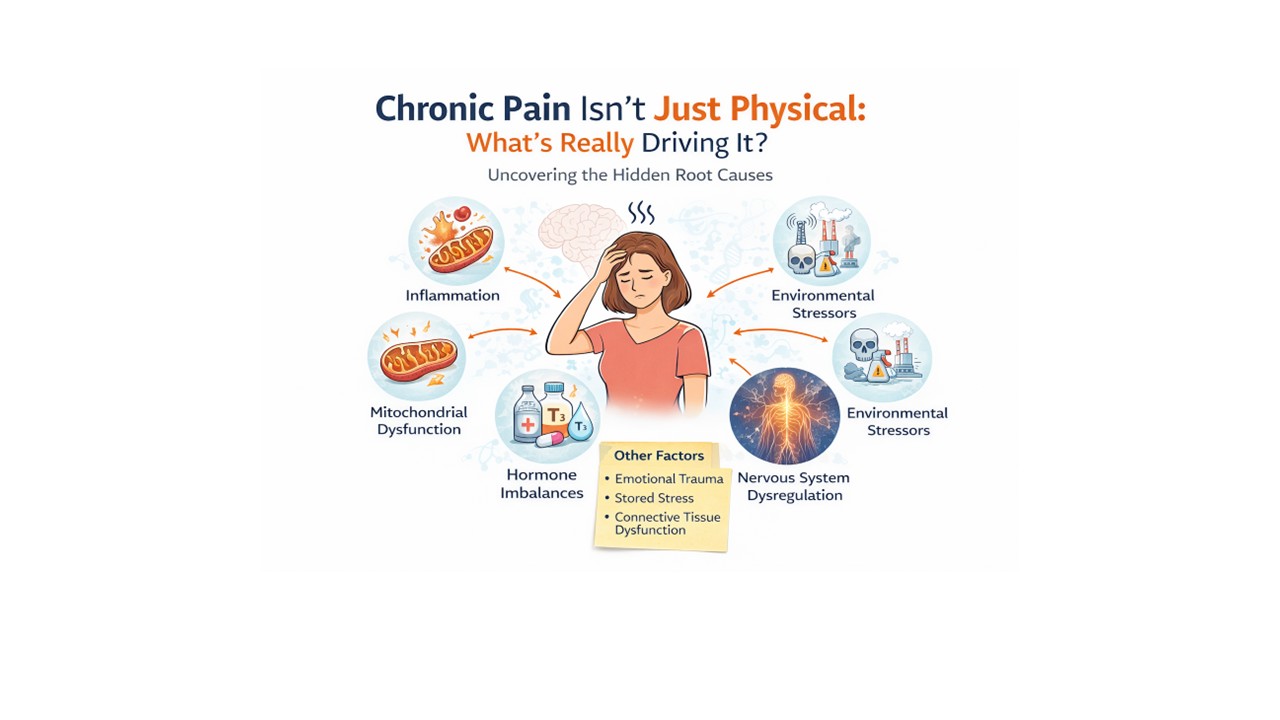
Key Root Causes to Explore
If you’re struggling with persistent or unexplained pain, these are some of the most important systems to evaluate with your care team.
1. Inflammation
Chronic pain has been strongly linked to persistent inflammation in the nervous system.
This inflammation can be triggered by:
- Gut imbalances (dysbiosis, leaky gut)
- Environmental toxins (mold, heavy metals, EMFs, processed foods)
- Poor sleep and circadian rhythm disruption
What helps:
- Healing the gut
- Reducing toxic exposure
- Prioritizing restorative sleep
2. Mitochondrial Dysfunction
Your mitochondria are responsible for producing energy in every cell.
When they’re not functioning properly:
- Pain pathways can become overactive
- Recovery slows down
- Fatigue and sensitivity increase
Supporting mitochondrial health through targeted nutrition and detoxification can be a powerful piece of the puzzle.
3. Hormone Imbalances
Hormones play a major role in:
- Pain perception
- Inflammation
- Stress response
Imbalances in:
- Cortisol
- Thyroid hormones
…can increase sensitivity to pain and contribute to chronic discomfort.
What helps:
- Detoxification support
- Nutritional repletion
- Stress regulation practices (like meditation)
It Goes Even Deeper…
Chronic pain is also commonly linked to:
- Emotional trauma & stored stress
- Nervous system dysregulation
- Connective tissue dysfunction
This is why a functional medicine approach is so powerful—it looks at the whole system instead of just suppressing symptoms.
And this is where real healing begins.
A Simple Breathwork Exercise for Pain Relief
One of the fastest ways to interrupt the pain cycle is by calming the nervous system.
Try this simple exercise:
✔ Inhale slowly through your nose for 4 seconds
✔ Hold for 4 seconds
✔ Exhale slowly through your mouth for 8 seconds
✔ Repeat for 5–10 rounds
This helps:
- Oxygenate tissues
- Activate the vagus nerve
- Shift your body out of “fight or flight”
👉 Even a few minutes can make a noticeable difference.
There Is Hope
If you’ve been told your only option is to “manage” your pain…
I want you to hear this:
There are deeper answers.
When you begin addressing the root causes—rather than just the symptoms—you give your body the opportunity to truly heal.
Want to Learn More?
If you're looking for additional support and deeper insight into healing chronic pain, I highly recommend exploring The High Speed Healing Summit.
It features powerful approaches that go beyond conventional care and focus on activating the body’s natural healing ability.
I personally respect Dr. Deborah Wayne’s work and have benefited from her methods myself.
Always have hope for your health and healing
Chronic pain isn’t just structural—it’s often driven by inflammation and metabolic dysfunction…
Many of the issues we’ve discussed—whether it’s hormone imbalance, inflammation, chronic pain, or toxin exposure—share a deeper connection with metabolic signaling and appetite regulation.
One of the most important pathways involved is GLP-1, a hormone that influences:
- blood sugar balance
- inflammation
- satiety and cravings
- energy metabolism
When GLP-1 signaling is disrupted, it can make symptoms worse—and healing much harder.
That’s why we created a free 95-page guide to help you understand how to naturally support these pathways and start addressing root causes.