👉 Biotoxins and Hormones: What You Need to Know
Apr 11, 2026Are Hidden Toxins Disrupting Your Hormones?
If you’ve been struggling with symptoms like fatigue, weight gain, brain fog, or hormonal imbalance—and haven’t found clear answers—you’re not alone.
Many people are experiencing a growing number of unexplained health issues, especially in the years following Covid. What’s often overlooked is a major underlying contributor:
👉 Biotoxins
These hidden toxins can disrupt hormonal balance at a deep cellular level, affecting everything from energy and metabolism to mood and reproductive health.
What Are Biotoxins?
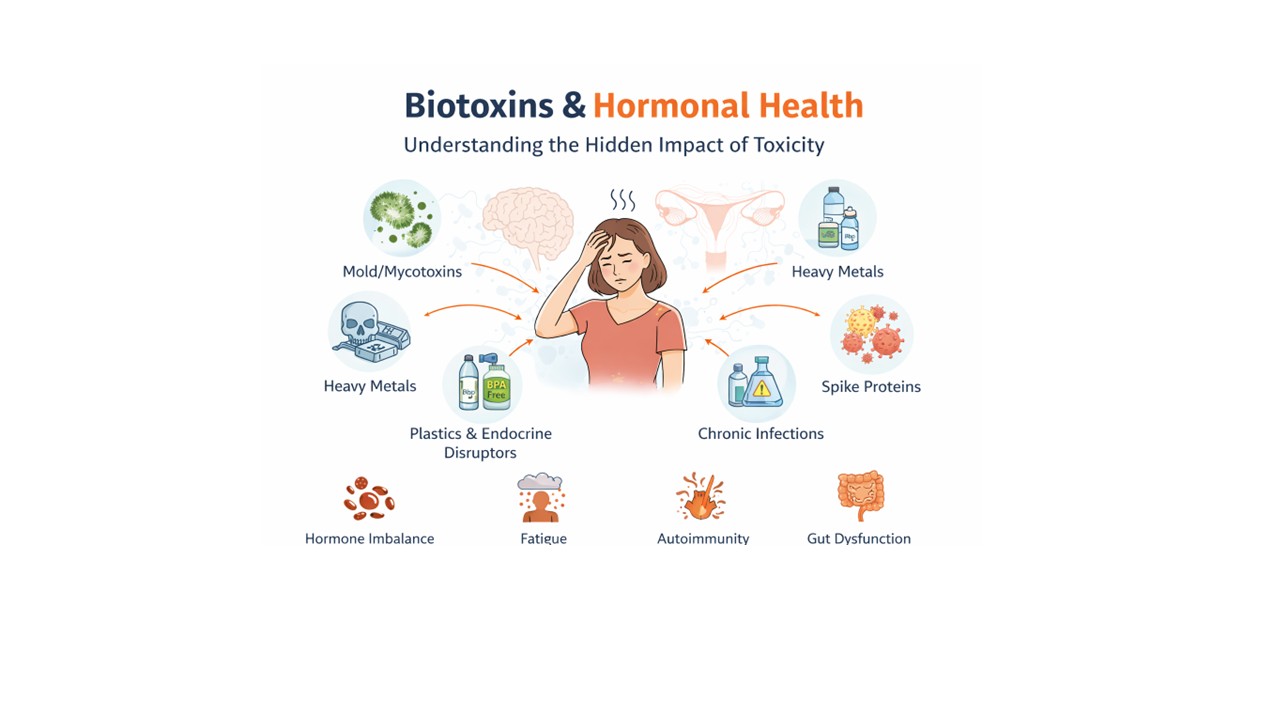
Biotoxins are fat-soluble toxins that accumulate in the body’s tissues—particularly in cell membranes, mitochondrial membranes, and fat stores such as the brain and breast tissue.
Because they are fat-soluble, they are not easily eliminated and can persist in the body, interfering with normal cellular function.
Common sources of biotoxins include:
- Mycotoxins (from mold exposure)
- Heavy metals (mercury, aluminum, and others)
- Plastics & endocrine disruptors (BPA, phthalates)
- Environmental chemicals (pesticides, herbicides)
- Chronic infections and viral exposures
- Post-viral byproducts, including spike proteins
How Biotoxins Impact Hormonal Health
When biotoxins accumulate in the body, they embed within cell membranes and disrupt normal signaling pathways.
This can lead to:
- Impaired mitochondrial function (reduced cellular energy)
- Disrupted hormone signaling
- Increased oxidative stress
- Chronic inflammation
- Immune dysregulation
Over time, this disruption may contribute to:
- Autoimmune conditions
- Infertility and menstrual irregularities
- PCOS and abnormal bleeding
- Neuroinflammation and cognitive issues
- Mood disorders such as anxiety and depression
- Hormone-related cancers
Why Are These Issues Increasing?
Today, we are exposed to more toxins than ever before—while our natural detoxification systems are under increasing strain.
Your body relies on multiple systems to process and eliminate toxins, including:
- The liver
- The gut
- The kidneys
- The lymphatic system
- The immune system
- Even the sinuses
However, these systems can become overwhelmed due to:
- Chronic stress
- Poor diet
- Environmental exposures
- Infections
- Lack of proper nutrients
Each person has a unique “toxic threshold.” Once that threshold is exceeded, symptoms begin to appear—often showing up as hormonal imbalance, fatigue, or chronic illness.
How to Support Detoxification and Restore Balance
While personalized testing and care are important, the foundation of healing begins with addressing the basics.
Clean Food
Remove inflammatory and processed foods while focusing on nutrient-dense, whole foods that support hormone balance and detoxification.
Clean Water
Use high-quality filtration to reduce exposure to heavy metals, plastics, and other contaminants.
Clean Air
Minimize exposure to mold, pollutants, and synthetic fragrances in your environment.
Clear Mind
Support your nervous system through stress reduction, restorative practices, and mind-body techniques. A regulated nervous system plays a key role in detoxification and hormonal balance.
When Additional Support May Be Needed
Once these foundational areas are addressed, some individuals may benefit from targeted interventions, including:
- Nutritional support
- Detoxification protocols
- Functional testing (such as Organic Acids testing)
- Bioidentical hormone therapy when appropriate
These approaches can help restore vitality, improve cognition, and support long-term health when used in the right context.
Why This Matters
Detoxification is not a trend—it is a foundational aspect of health.
If your body is burdened by biotoxins, it becomes much more difficult to maintain hormonal balance, energy, and overall well-being.
Addressing these underlying factors can be a critical step toward resolving chronic symptoms and restoring optimal function.
Final Thoughts
Your body is designed to heal—but it must first be supported in clearing what is interfering with that process.
By understanding the role of biotoxins and taking steps to reduce exposure while supporting detoxification, you can begin to restore balance at the cellular and hormonal level.
Stay curious. Keep asking questions. And remember—true healing often begins beneath the surface.
Always have hope for your health and healing. 🌿
Want to understand what’s really driving your symptoms?
Many of the issues we’ve discussed—whether it’s hormone imbalance, inflammation, chronic pain, or toxin exposure—share a deeper connection with metabolic signaling and appetite regulation.
One of the most important pathways involved is GLP-1, a hormone that influences:
- blood sugar balance
- inflammation
- satiety and cravings
- energy metabolism
When GLP-1 signaling is disrupted, it can make symptoms worse—and healing much harder.
That’s why we created a free 95-page guide to help you understand how to naturally support these pathways and start addressing root causes.
👉 Get the free 95-page guide